
The curious English name probably derives from the old Doctrine of Signatures, which proposed that the outward appearance of plant parts hinted at possible therapeutic use. The flower buds were thought to resemble nipples, and so the plant was once recommended for breast and skin complaints. Whether it was ever widely used is less certain than the name itself.
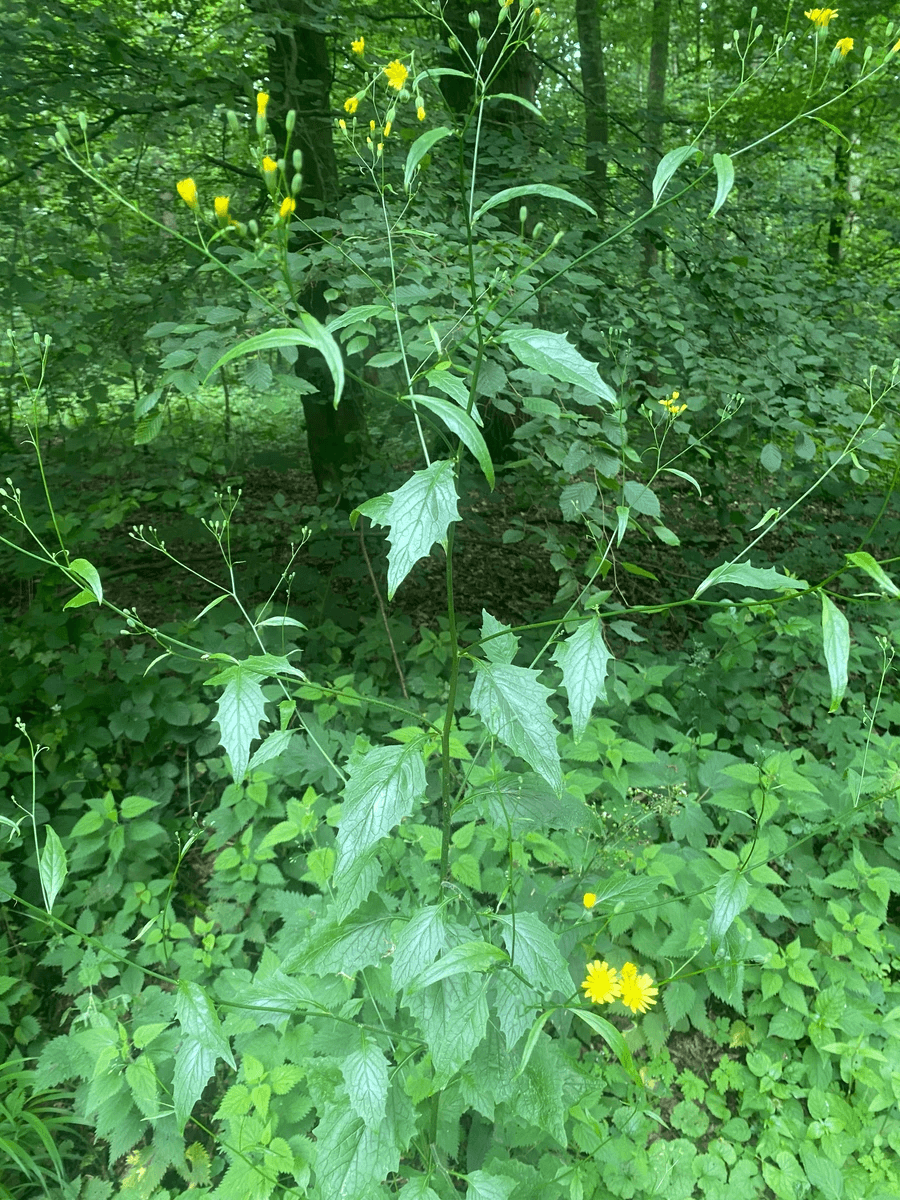
The name in French, Lampsane commune, closely follows the botanical name, whereas the Dutch, Akkerkool, hints at a plant regarded as edible. In this instance, kool is used in its older, broader sense of a leafy plant suitable for the table rather than specifically a cabbage.
Three very different approaches to naming, reflecting three distinct cultural traditions. The English name preserves a fragment of folk medicine, the French a link to classical scholarship, and the Dutch a memory of a plant that once may have found its way into a stamppot.