
Looking over old maps of the Forest, one sees trees named ‘Wolfs Appelar’ and ‘de Raefeyck’ amongst others, trees that were part of the landscape for so long that they were not just navigational aides, but also had their own stories, their own lore and legend.
I have seen a reference to the legend of the 𝑅𝑜𝑛𝑑-𝑐ℎ𝑒̂𝑛𝑒 𝑑𝑒 𝑙𝑎 𝑑𝑟𝑒̀𝑣𝑒 𝑑𝑒 𝐿𝑜𝑟𝑟𝑎𝑖𝑛𝑒. I have never found the tale and wonder what mystery surrounded this Round Oak. Consequently my mind wanders, nay, wonders.
Hollow trees, oaks being particularly well suited to this structure in ancient age, are well recorded in literature. Robin Hood had the Major Oak in Sherwood forest where he and his men were said to shelter. There’s also the less famous Shambles Oak, or Robin Hood’s Larder: a hollow oak reputedly used to store venison.
Enid Blyton, the English Children’s writer has two particularly apt titles in her bibliography; The Magic Faraway Tree, and, tellingly, Hollow Tree House where her children fictionally played. There must be countless other examples from other cultures and traditions.
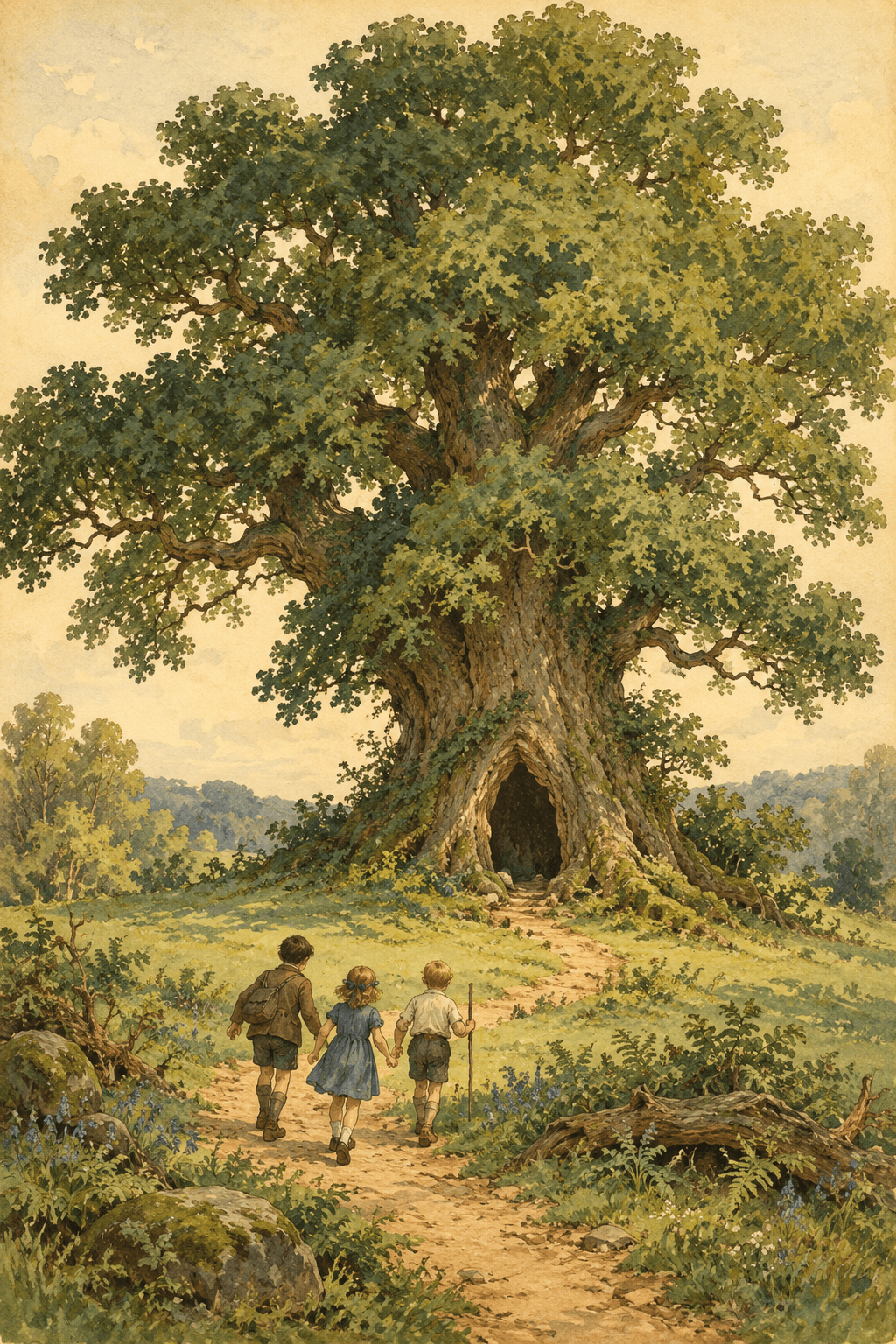
Yesterday I providentially took a group of school children to Ghent, to visit the castle and St. Bavo’s cathedral. It was his feast day. Bavo's medieval legend says that during his eremitical life he lived inside a hollow tree. At Mendonk, north of Ghent, a Sint-Bavokapel marks the place traditionally associated with that hollow tree, and the local Bavo parish still explicitly preserves the tradition.
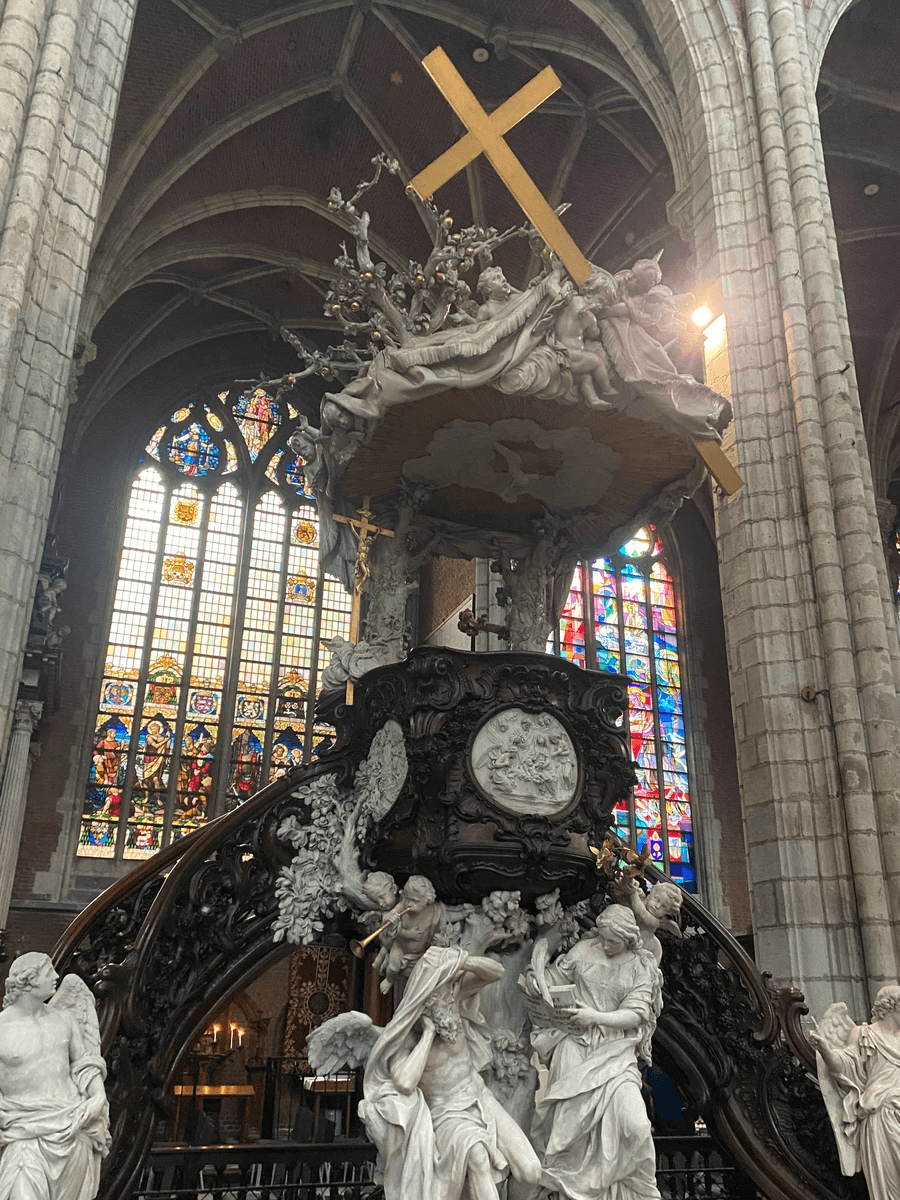
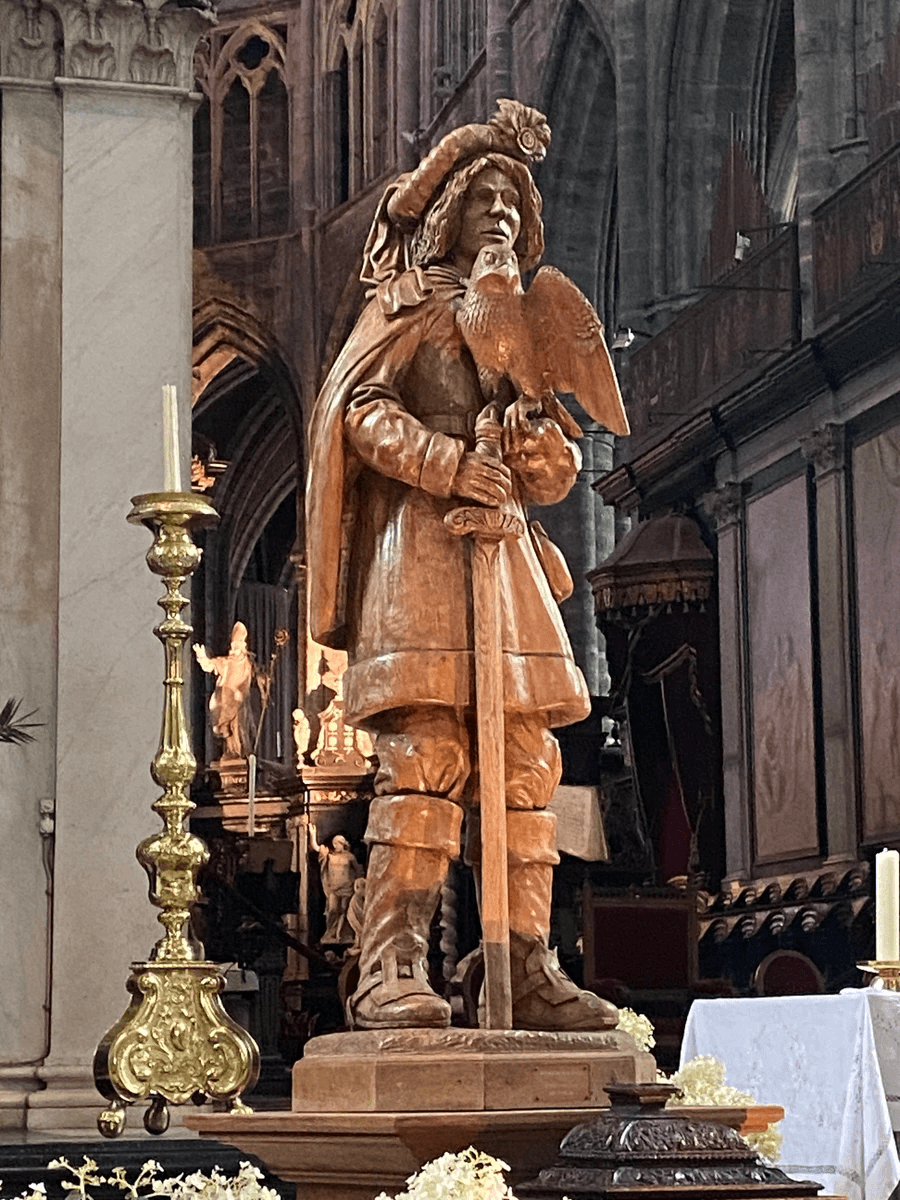
Look at the pulpit, with its organic structure echoing that of a tree, branches visible at the top. See also the wooden statue of the soldier turned saint, with his characteristic falcon.
Should I struggle to find the actual legend of the Round Oak of the Drève de Lorraine, I may fancy to write one of my own. And I may equally fancy to make it hollow.