
𝐈𝐟 𝐲𝐨𝐮 𝐰𝐞𝐧𝐭 𝐭𝐨 𝐭𝐡𝐞 𝐰𝐨𝐨𝐝𝐬 𝟏𝟎𝟎 𝐲𝐞𝐚𝐫𝐬 𝐚𝐠𝐨...
𝟏𝟑. 𝐓𝐫𝐞𝐞 𝐏𝐢𝐩𝐢𝐭 - 𝐏𝐢𝐩𝐢𝐭 𝐝𝐞𝐬 𝐚𝐫𝐛𝐫𝐞𝐬
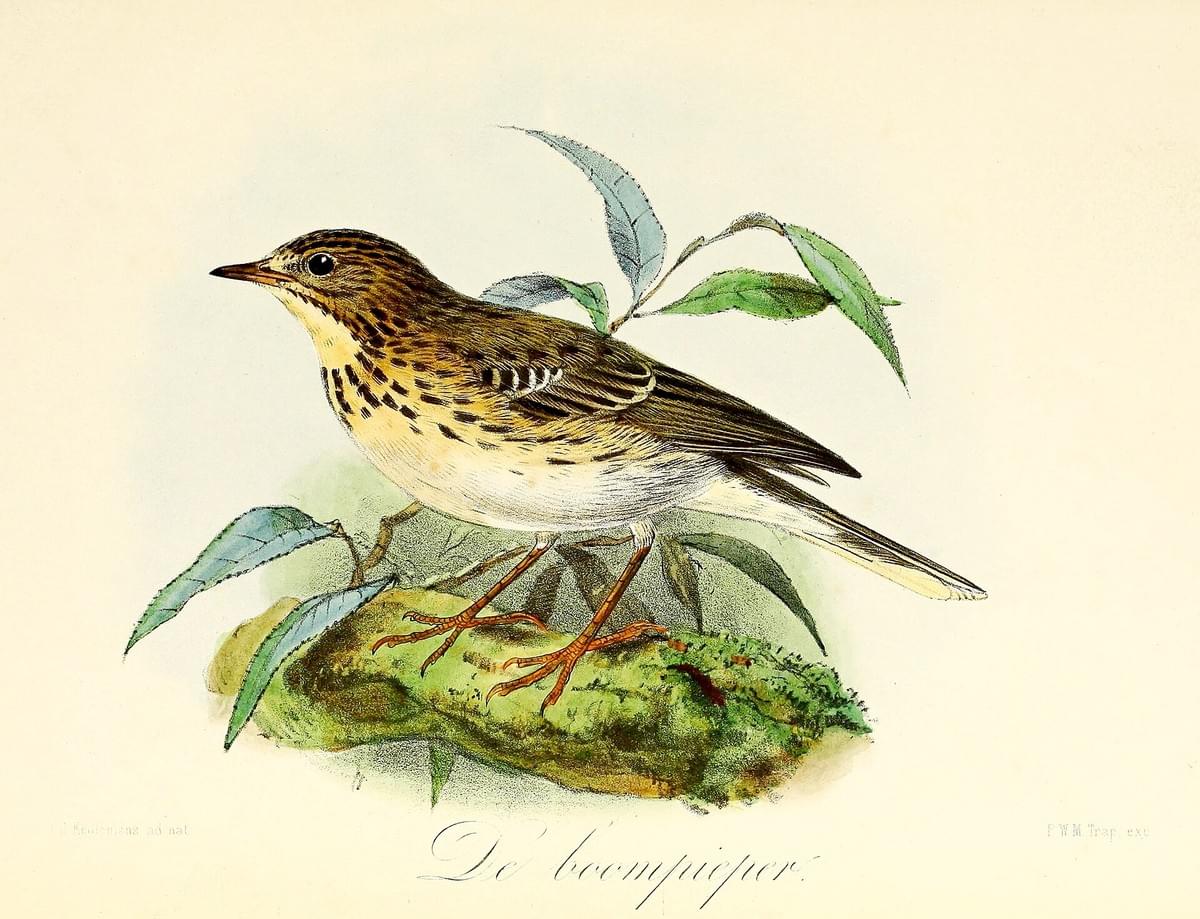
Le Pipit des arbres est un véritable forestier, mais il recherche les endroits les moins touffus de la forêt. En dépit de son appellation, le Pipit des arbres se tient plus à terre que dans les branches et passe la nuit sur le sol, caché dans une touffe d’herbes ou de bruyères. Le mâle est un chanteur émérite et infatigable ; sa voix peut se comparer à celle du canari. Ainsi que les Pouillots, ce Pipit nous délaisse à la fin de l’été.
EN version
The Tree Pipit is a true woodland bird, but it seeks out the least densely wooded parts of the Forest. Despite its name, the Tree Pipit spends more time on the ground than in the branches and passes the night on the ground, hidden in a clump of grass or heather. The male is an accomplished and tireless singer; his voice may be compared to that of the canary. Like the warblers, this Pipit leaves us at the end of summer.
Dr. Alphonse Dubois, conservateur honoraire au Musée d’Histoire naturelle de Belgique from La Forêt de Soignes, edited by Stevens and Van der Swaelmen, 1920
Image by John Gerrard Kuelemans, 𝑂𝑛𝑧𝑒 𝑣𝑜𝑔𝑒𝑙𝑠 𝑖𝑛 ℎ𝑢𝑖𝑠 𝑒𝑛 𝑡𝑢𝑖𝑛, 1869
Footnote. I’ve never seen or heard one in the Forest. This is one of the few examples where the French and English common names coincide. Cuckoo and Noddy spring to mind.