
𝐈𝐟 𝐲𝐨𝐮 𝐰𝐞𝐧𝐭 𝐭𝐨 𝐭𝐡𝐞 𝐰𝐨𝐨𝐝𝐬 𝟏𝟎𝟎 𝐲𝐞𝐚𝐫𝐬 𝐚𝐠𝐨...
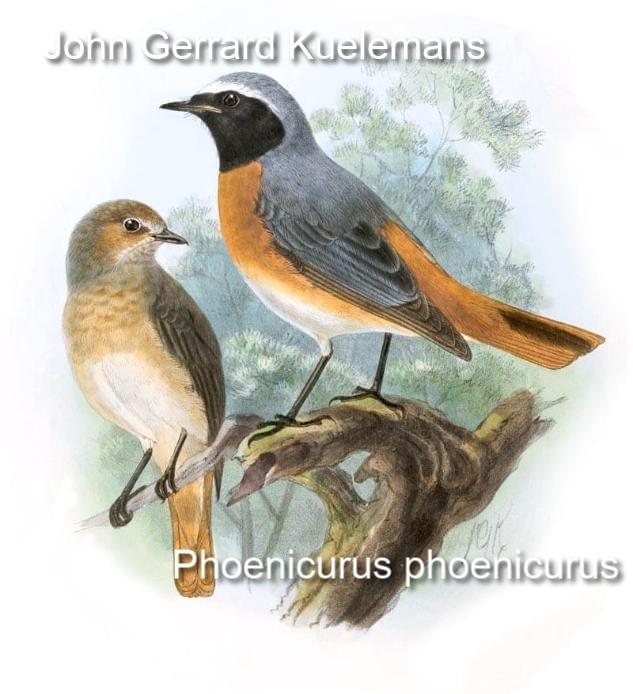
Voici le joli Rouge-queue dit Rossignol des murailles. Il choisit de préférence les clairières et c'est perché dans la cime d'un arbre élevé qu'il lance à l'envi dans l'espace ses notes perlées. Le mâle est gris en dessus, roux en dessous ; la gorge est noire, la queue d'un roux ardent. La femelle est brune, d'un ton plus pâle en dessous ; la queue est nettement rousse. Le chant du Rouge-queue si estimé ne saurait pourtant être comparé à celui du roi des oiseaux chanteurs, la plaintive Philomèle des nuits parfumées, le Rossignol, aux strophes multiples et variées à l'infini, mélodieuses, éclatantes, d'un timbre admirable de pureté, d'une puissance incomparable d'allures et d'expression. Il chante dans la nuit sereine. Il chante dès l'aube et salue l'aurore irisée. Il chante dans le poudroiement d'or du jour ensoleillé. Il chante encore aux heures crépusculaires, berçant le sommeil des tout petits oiseaux blottis, paisibles et confiants, sous la feuillée.
EN version
Here is the pretty Redstart, known as the Nightingale of the walls. It prefers clearings, and it is from its perch in the crown of a tall tree that it sends its pearly notes out into the air. The male is grey above, russet below; the throat is black, the tail a fiery russet. The female is brown, of a paler shade below; the tail is distinctly russet.
The song of the Redstart, highly esteemed though it is, cannot however be compared with that of the king of songbirds, the plaintive Philomela of perfumed nights, the Nightingale, whose phrases are endlessly numerous and varied, melodious and brilliant, with a tone of admirable purity and an incomparable power of movement and expression. It sings in the serene night. It sings from dawn and greets the iridescent daybreak. It sings amid the golden shimmer of the sunlit day. It sings still into the twilight hours, lulling to sleep all the little birds nestled beneath the foliage, peaceful and trusting.
Original text by Dr. Alphonse Dubois, conservateur honoraire au Musée d’Histoire naturelle de Belgique from La Forêt de Soignes, edited by Stevens and Van der Swaelmen, 1920