
This one took me by surprise. It is the European Spindle, 𝐸𝑢𝑜𝑛𝑦𝑚𝑢𝑠 𝑒𝑢𝑟𝑜𝑝𝑎𝑒𝑢𝑠, which not only is associated with calcareous soils but also was historically rather local in Belgium. In spring you could be forgiven for not noticing the small, greenish-white flower clusters, but now its four-lobed crimson capsules are unmissable. Birds love these and the leaves feed several moth caterpillars, including the aptly-named spindle ermine.
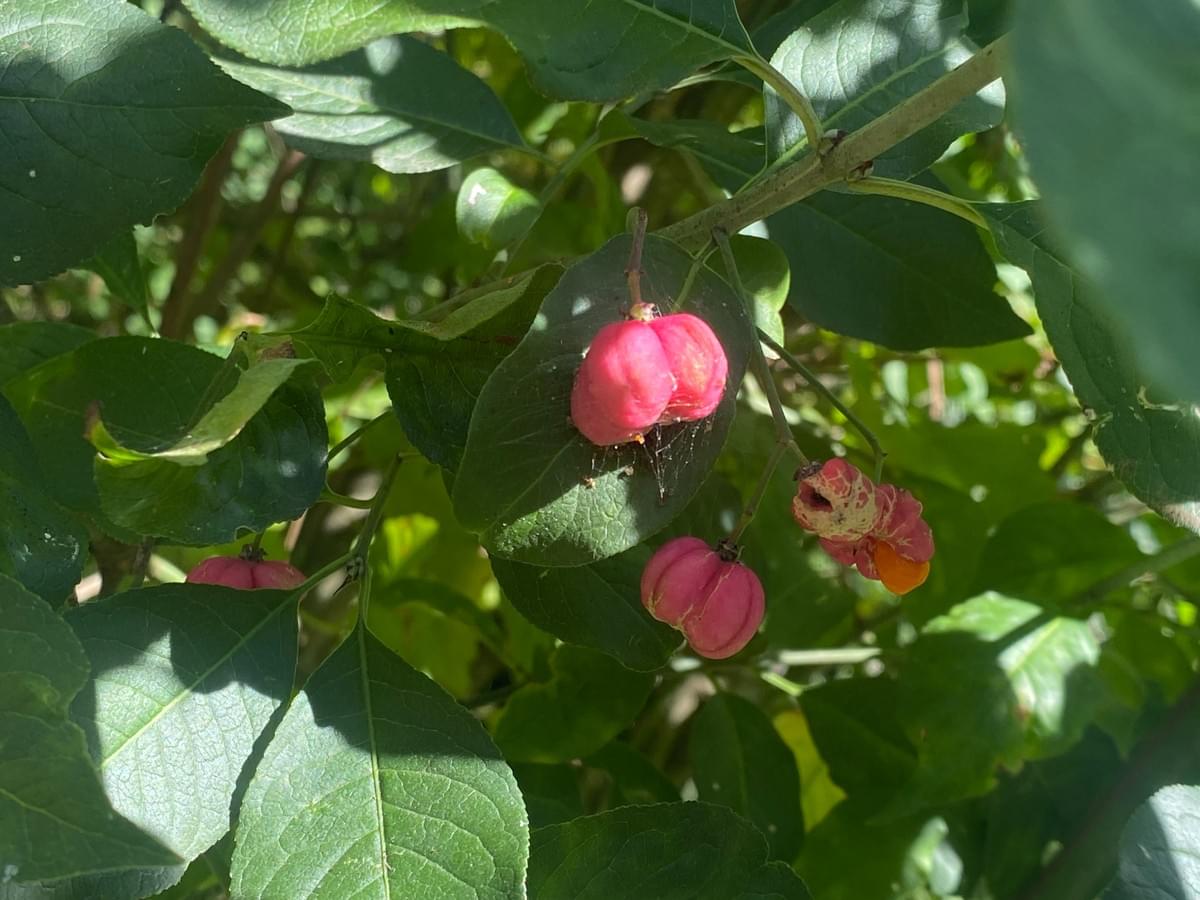
It owes its English name to the wood: the branches, being straight and hard, were used to make spindles for spinning wool. There’s not so much call for these nowadays, but it still finds use for artists’ charcoal.
Quite what this untidy shrub was doing by the side of the Drève Saint Michel I don’t know. The soil scarcely seems appropriate. I suspect the seed was delivered from above.