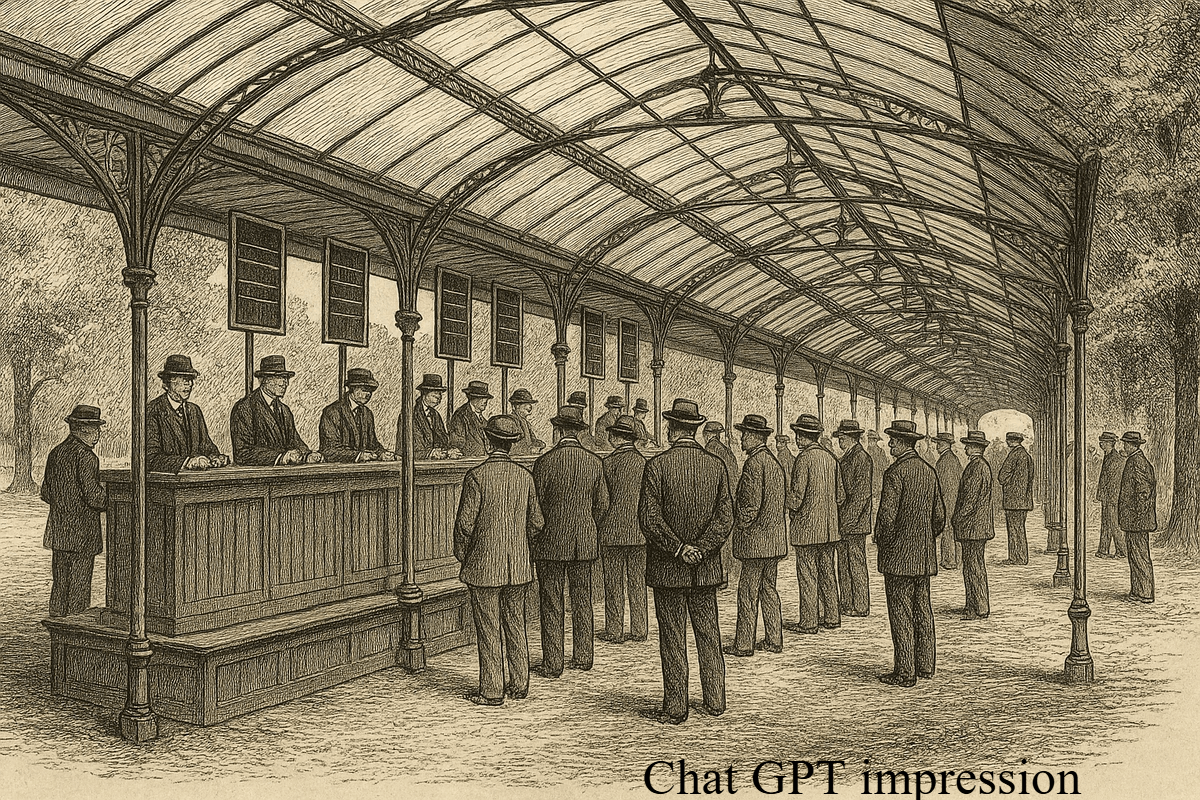
The surviving iron framework at the former racecourse at Groenendaal is best understood as a covered betting terrace, typical of Belgian and French racecourses of the late 19th and early 20th century. Its form and construction elements clearly indicate that it once supported a glazed canopy, not a simple open pergola.
The evidence is architectural:
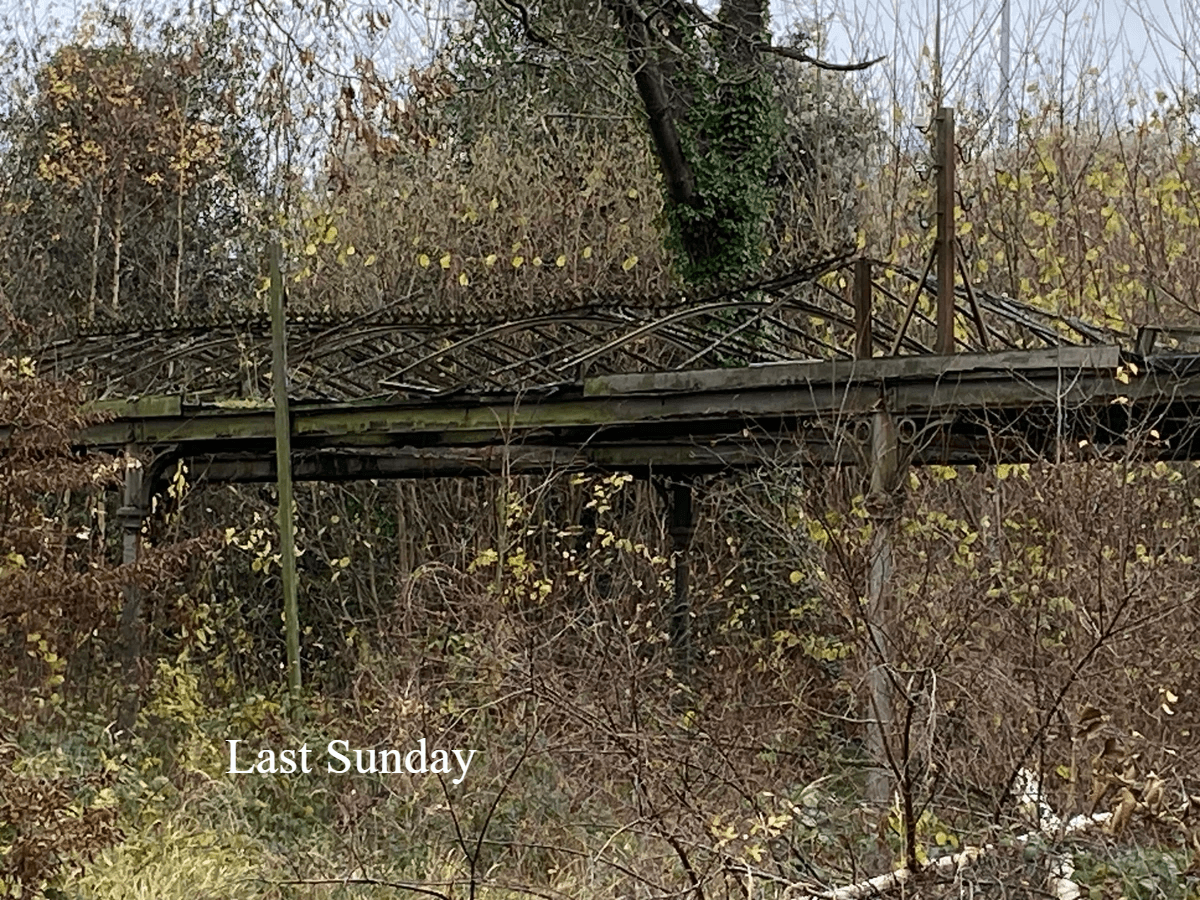
- Arched iron ribs, evenly spaced, form a structural truss pattern designed for light roofing materials such as glass panes.
- A central ridge spine links these ribs, consistent with station-style awnings and promenade galleries of the era.
- The presence of flat glass fragments beneath the structure confirms the use of glazing rather than slate or sheet roofing.
- The slender cast-iron support posts, complete with small arched brackets, are sized for the load of a lightweight roof, not for a purely decorative installation.
Historically, bookmaker facilities required visibility, weather protection, and controlled pedestrian flow. A covered gallery achieved all three: bookmakers operated from raised counters under the canopy, while punters moved below, sheltered from the rain. Chalkboards, flip-boards, and early electric odds displays would have been mounted above the counter line.
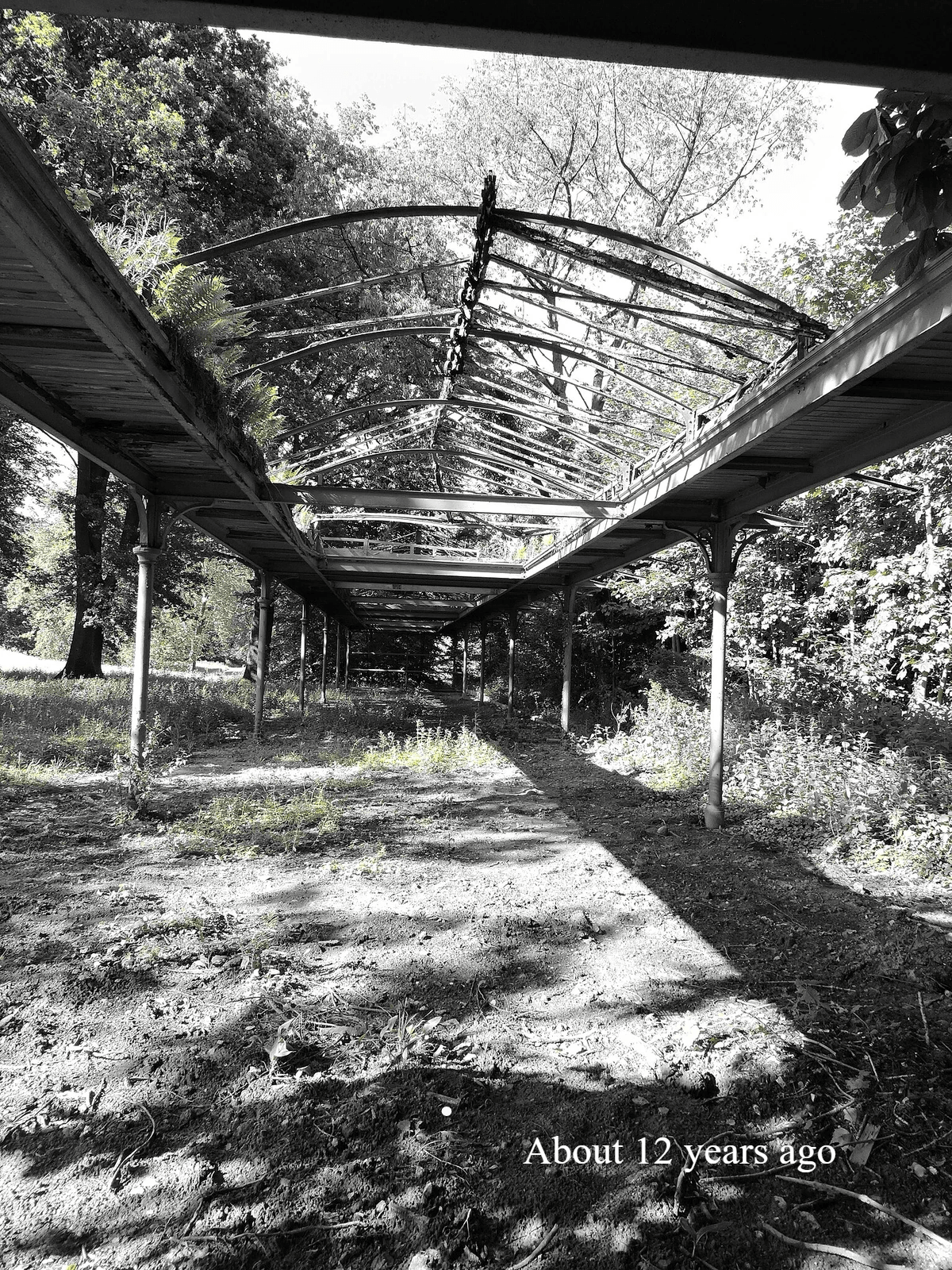
The surviving structure shows clear signs of phasing. The iron canopy likely dates from the early decades of the 20th century, while the timber decking beneath it appears to have been replaced mid-century. After the course closed, maintenance ceased and natural succession began: moss, willow, birch and fern colonies now occupy the old guttering and glazing joints.
As such, the structure is a rare surviving example of leisure infrastructure from Belgium’s racing heritage. Although modest, it is one of the last physical traces of how betting activity was organised and experienced at Groenendaal — a fragment of social history quietly dissolving into the surrounding forest.