

and talks a bit
et discute un peu
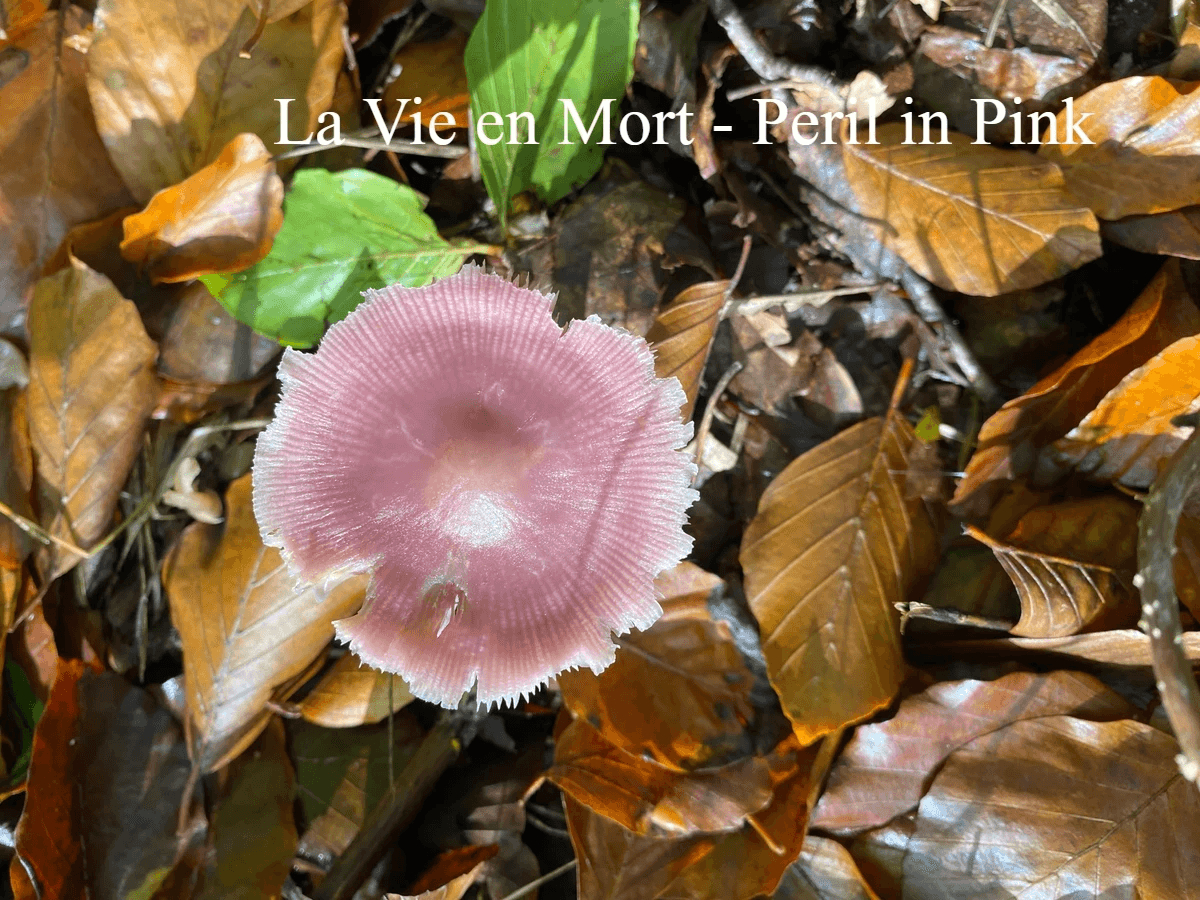
La Vie en Mort - Peril in Pink
Among the fallen beech leaves of the Forêt de Soignes, the Rosy Bonnet, Mycena rosea, brings a sudden wash of pink to the browns of autumn. The English name “Rosy Bonnet” reflects its neat, bell-shaped cap, like a child’s bonnet drawn close under the chin, and its unmistakable rose-tinted hue. In French, Mycène rose says much the same, simple, descriptive, and affectionate. The Dutch Roze mycena does likewise, naming both the colour and the genus. This is one of the few genuinely pink fungi.
The genus Mycena comes from the Greek mykes, meaning fungus or mushroom, while rosea is Latin for rosy or pink. Together they describe this delicate woodland dweller perfectly: small, graceful, and fragile, often standing like a tiny parasol above the beech litter. The cap is striated and translucent, its gills pale and crowded, the stem smooth and brittle.
Though charming, this is no innocent. Like its close cousin Mycena pura, the Rosy Bonnet contains muscarine, a potent compound that interferes with the body’s parasympathetic system. Those who ingest it may quickly feel waves of sweating, tearing, drooling, nausea, stomach cramps, and a dangerously slowed heartbeat. While rarely fatal, the experience is deeply unpleasant, a reminder that beauty in the forest can hide a sharper truth.
So we look, but never touch. It stands as a small lesson in restraint, that the forest’s gentlest colours can mask the strongest of defences.
