
Walking along the bronze-strewn paths, snow arresting on leaves, the robin hops from branch and bough. Are we companions, and who is following whom? We have different motives, the two of us.
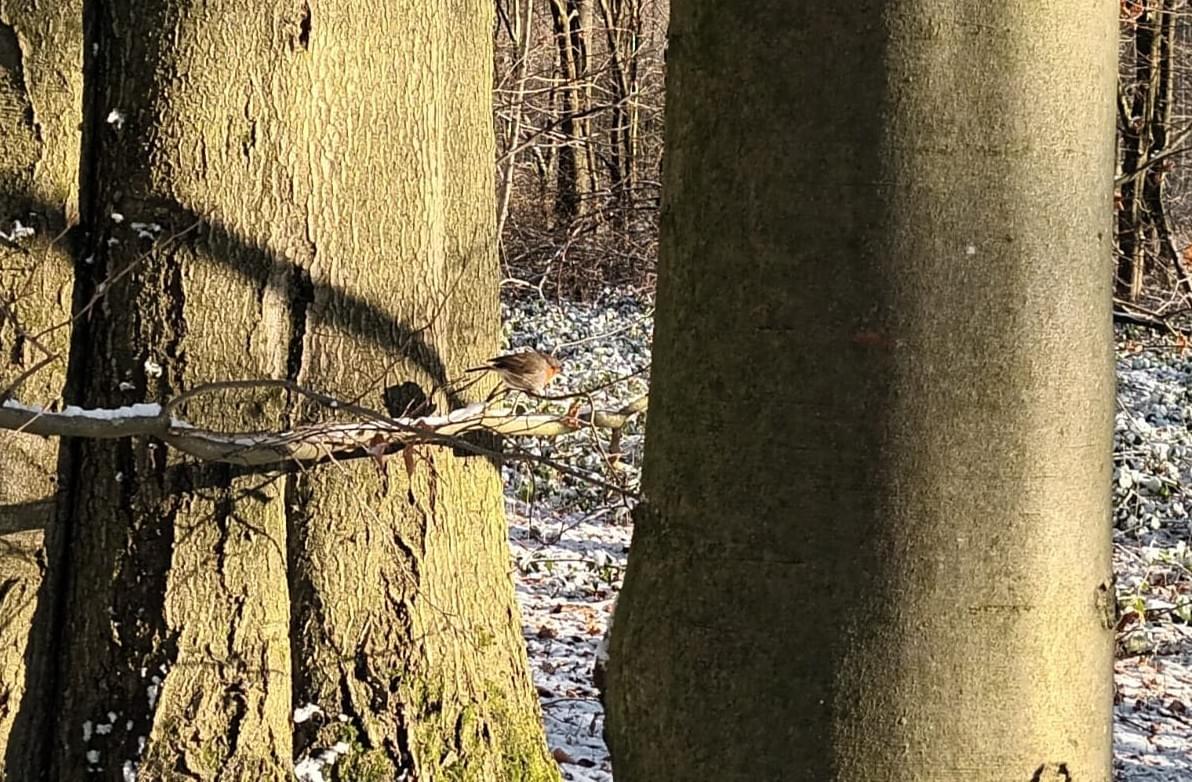
I watch the robin, often just two wingbeats ahead, pausing, then dancing forward in shallow loops. At some point he stops, then flies back to investigate what my footsteps have revealed, his daring proximity giving him first seat at the table.
The baton is passed. As I move into the next territory, a different robin takes over.
My motives are no less needy. I enjoy his company. It soothes. The watching connects me more closely to my surroundings.
“Who killed Cock Robin?
I, said the Sparrow,
With my bow and arrow,
I killed Cock Robin.”
Was it through jealousy? Did the sparrow, mesange, mus, resent the robin’s closer relationship with man, see him as an interloper invading a space where sparrow and man had coexisted for centuries? By using man-made tools to kill him, was the sparrow signalling that man was not to be trusted, turning the robin into a blood-stained martyr?
Or is it simply a nursery rhyme, arrow and sparrow paired only for the sake of the couplet?