
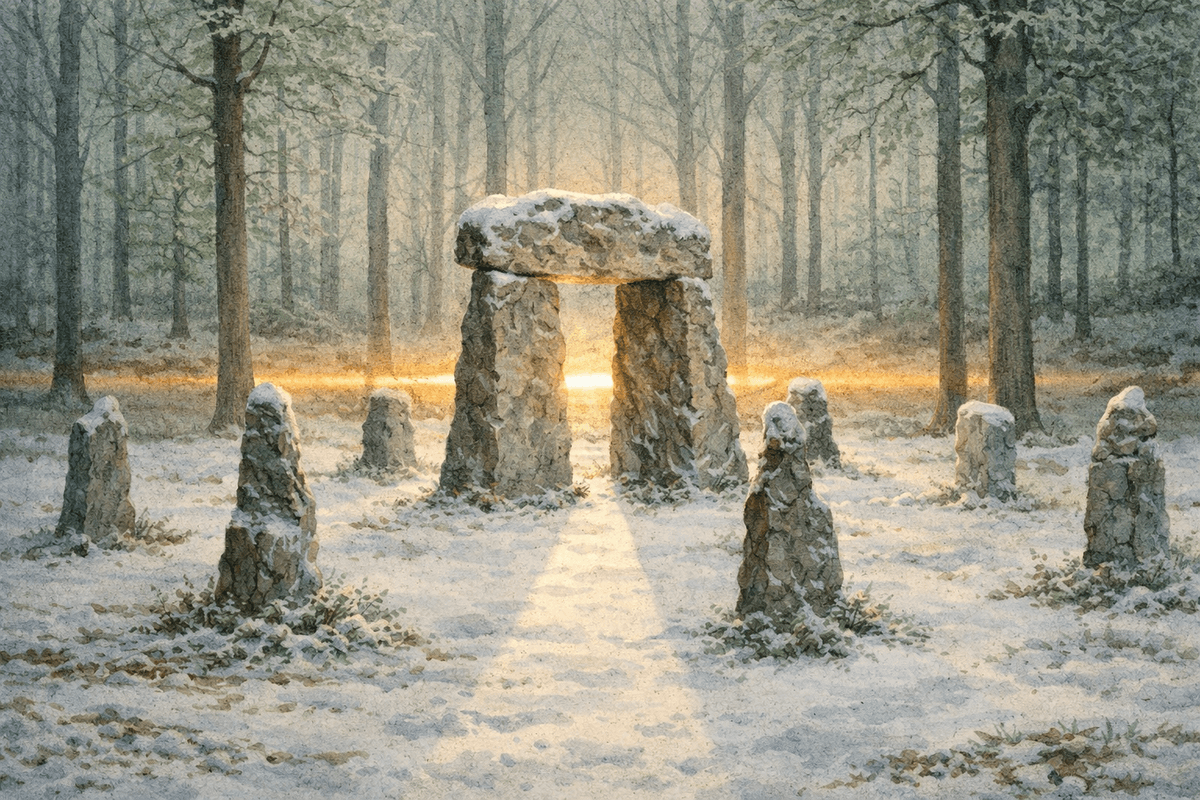
The winter solstice occurred at exactly 10:03 this morning, the very timing of this post.
Midsummer Eve fills shelves and stages. It is Shakespeare’s forest of quarrelling lovers and watchful sprites. It is bonfires on hilltops, maypoles on greens, and lanterns hanging late into the warmth of night. Art and literature return to it again and again, because it is outward-facing, communal, and theatrical. Summer allows spectacle.
Midwinter Eve is different. So different, in fact, that it barely exists as a distinct theme in the arts at all. We have winter landscapes, certainly: Bruegel’s skaters and Avercamp’s frozen canals, Friedrich’s solitary figures under pale skies. We have Christmas scenes, domestic and devotional. We have ghost stories set against frost and fog. Yet none of them claim the night before the solstice as their own. The threshold of midwinter remains largely unnamed.
This absence is telling. Midwinter Eve was never a public festival. It did not invite gatherings beneath stars or dances on village greens. It belonged indoors, where firelight answered darkness. It belonged to superstition and quiet watchfulness rather than theatre. In northern Europe, people understood that deep winter was not a stage upon which to perform. It was a season to endure, with patience rather than spectacle.
Even Rossetti’s ‘In the bleak midwinter’ can hardly be called folkloric. Yes, we have frosty winds making moan in the first verse but it becomes pious very quickly with breastfuls of milk and mangers full of hay.
The forest reflects this silence. It does not celebrate. It waits. The beech stands bare and pale, each trunk catching what little light the short day allows. Ivy persists. Holly endures, stunted and browsed. Deer move with deliberate caution. Nothing announces the solstice. Nothing heralds it. Yet the sense of expectation is unmistakable. The sun has retreated as far as it can.
In this way, the forest mirrors the cultural gap. Midsummer inspires stories because it invites participation. Midwinter invites reflection. It is introverted where Midsummer is extroverted. It is shelter, not celebration.
So perhaps the absence of a folkloric Midwinter Eve in literature and art is not ignorance or oversight. It is fidelity to what the season truly offered: stillness, caution, and the quiet conviction that darkness cannot deepen forever. It is the threshold rather than the scene beyond it.
Today the sun reaches its furthest point, pauses momentarily and then starts its slow return. The longest night has passed. And with that comes the faint yet certain promise that light will begin to reclaim the days.