
Although native to central and southern Europe, the Snowdrop, 𝐺𝑎𝑙𝑎𝑛𝑡ℎ𝑢𝑠 𝑛𝑖𝑣𝑎𝑙𝑖𝑠, is probably not native to the Forest. Having been here for centuries, however, it may fairly be called an archaeophyte.
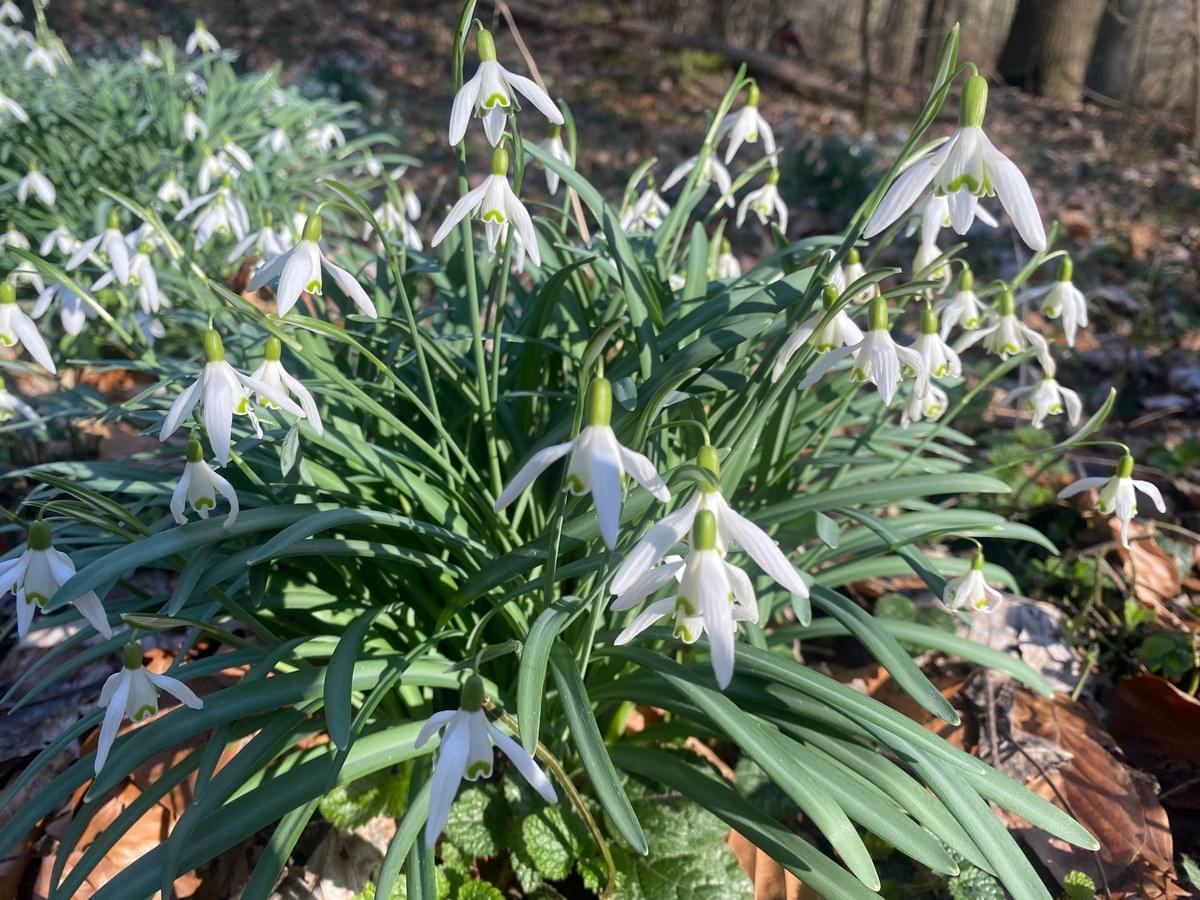
This is the only patch I know of near me. Snowdrops are often associated with human activity and, through Candlemas on 2 February, with monastic sites. Yet there has been no monastery nearby.
The drift sits behind what was once a small parking area, one of many closed over the past twenty years as visitors were encouraged towards hubs such as Groenendaal and Jezus-Eik. I am not entirely persuaded that the strategy has achieved what was intended.
They are certainly on disturbed ground, which suits them. They flower before canopy closure, support early pollinators, and quietly keep to themselves. They do not displace woodland flora in the way some later introductions can.
So who planted them? A forestry worker with a sentimental streak? A local with a pocketful of bulbs and a point to make? Or someone who simply preferred beauty to policy.
As for the name: Galanthus comes from the Greek gala, milk, and anthos, flower. A milk flower. Nivalis means of the snow. The name describes exactly what you should see. Milk white flowers in snow time, though snow now belongs more to Februarys past than present and future.