
𝐀 𝐊𝐧𝐢𝐠𝐡𝐭'𝐬 𝐅𝐚𝐧𝐜𝐲
There are two types of broom you may encounter at the margins or alongside the wider, more open paths: 𝐶𝑦𝑡𝑖𝑠𝑢𝑠 × 𝑝𝑟𝑎𝑒𝑐𝑜𝑥, an early-flowering garden escapee, and our native 𝐶𝑦𝑡𝑖𝑠𝑢𝑠 𝑠𝑐𝑜𝑝𝑎𝑟𝑖𝑢𝑠.
Cytisus is an old Greek name for a clover-like shrub, though they do not resemble clover at all. They do, however, belong to the same family.
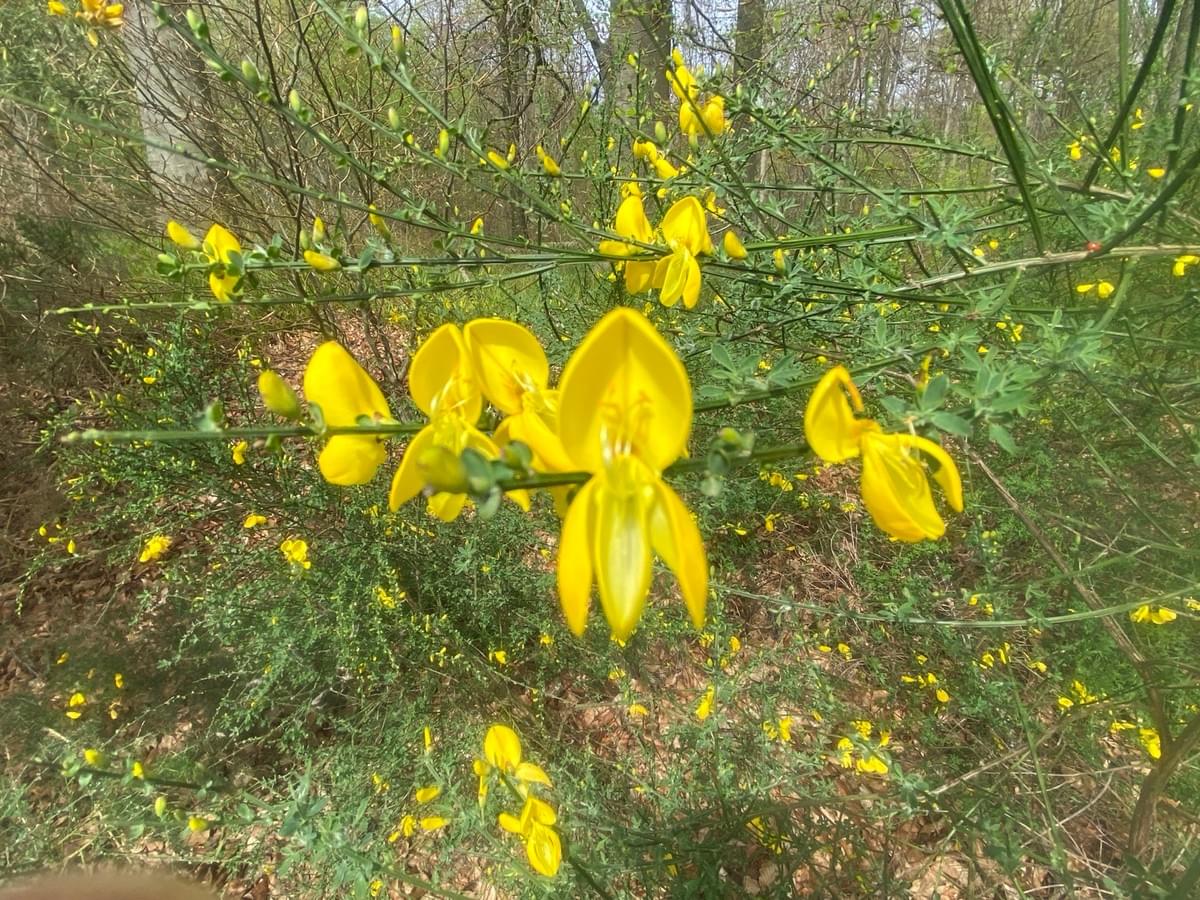
Praecox means “early”, and that is often the first clue as to which is which. The garden broom is generally first into flower, bearing pale cream, pea-like blooms. If you gently rub a petal between your fingers and take in the scent, it becomes clear that it is a member of the vast pea family, Fabaceae. Unlike garden peas, parts of the plant are toxic.
Scoparius means, quite literally, “broom”, and this was one of the traditional uses of its green, flexible stems. The native broom carries a much stronger, more saturated yellow, its flowers built to the same pea-like design.
On a historical note, broom gave its name to one of the most important royal dynasties to rule England. The father of the first Plantagenet king, Henry II, was Geoffrey of Anjou, who is said to have worn a sprig of broom in his helmet. The French word for broom is 𝑔𝑒𝑛𝑒̂𝑡.
A plant of both humble and regal associations, quietly enriching poor, sandy soils with nitrogen. And sandy soils are, for the most part, what the Forest rests upon.