
The first snow always seems to take people by surprise. Not much, just a thin scatter falling between the trees, as if someone brushed flour across the forest. We still see leaves and earth beneath it, so it feels more like decoration than weather. Yet that tiny layer does far more than we think. It sets the tone for spring.
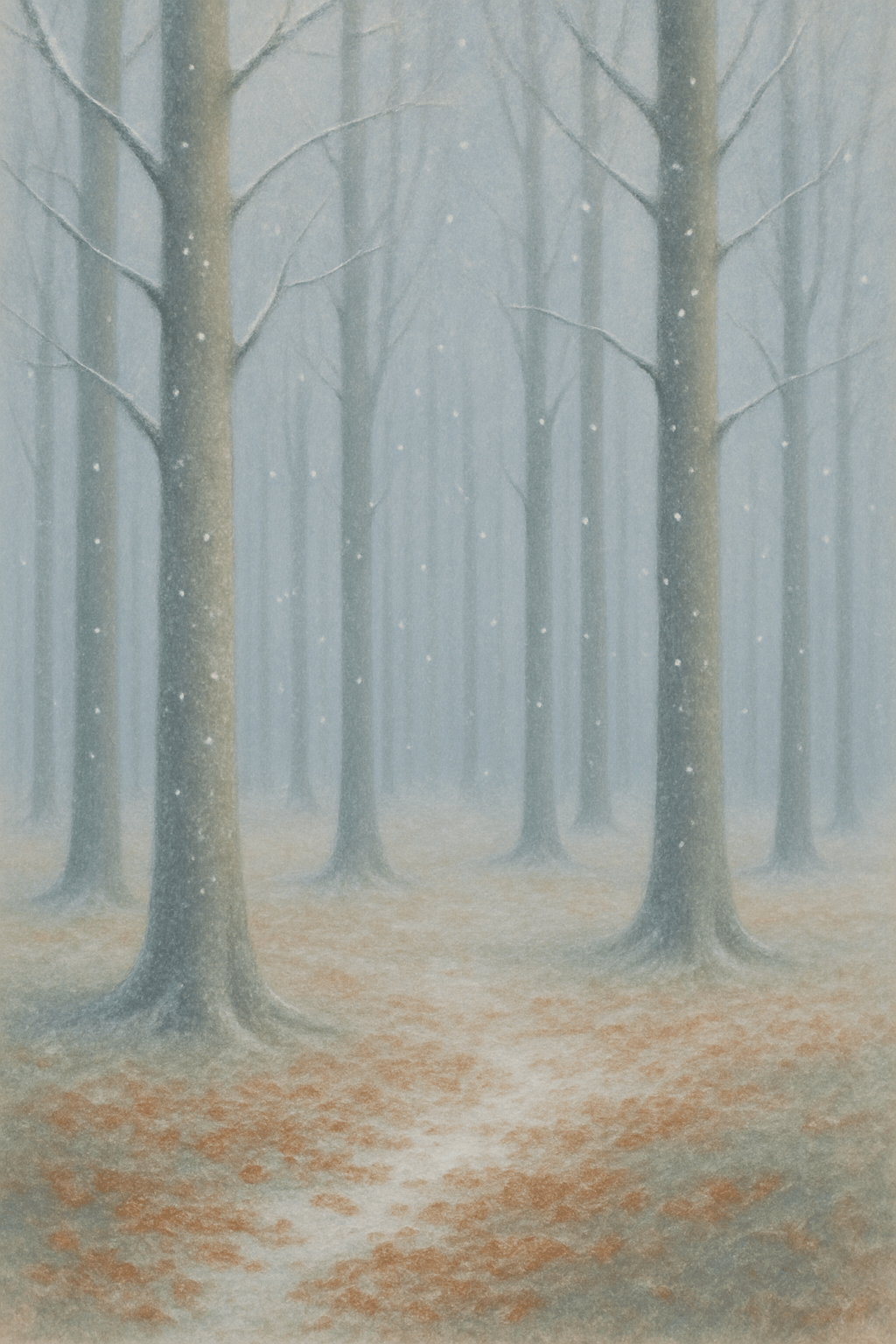
Snow is not just cold. It’s insulation. In the Sonian Forest, even a few centimetres can change how much life survives the winter. Under a light snowy blanket, the soil is slightly warmer than the air. It never quite freezes solid, so fungi keep working slowly in the leaf litter. They don’t produce fruiting bodies now, but they’re still alive, busy behind the scenes, breaking down wood and leaves, drip-feeding nutrients into the forest floor. A winter without snow presses the pause button. A winter with snow turns the volume down, but the song keeps playing.
The same is true for insects. When there’s no snow, the cold cuts straight to the ground, and it’s the sudden freezing and drying that kills overwintering larvae and eggs. Snow stops these violent temperature swings. It’s counterintuitive, but many insects have a better survival rate in a snowy winter than a bare, icy one. Come spring, that difference becomes visible. No one thinks of hoverflies or solitary bees as “snow beneficiaries”, yet they are. A snowy winter means more early pollinators. A mild-looking but snowless one can leave the spring strangely quiet.
Plants, too, show the legacy. Ground dwellers like wood sorrel and young ferns don’t look sorry for themselves after a snowy winter. Snow shields them from drying winds. Ivy climbs out of winter looking smug. Buds on saplings stay hydrated. Snow doesn’t feed a forest, but it protects its investment.
And then we get to the creatures that leave tracks. Small mammals do rather well beneath snow. Voles and shrews move through a secret corridor between the ground and the frozen crust. Warmer than the air above, protected from hungry eyes, this “under-snow world” keeps their populations ticking along. Spring owl numbers are sometimes a direct reflection of what the winter gave — or withheld.
Without snow, everything is more exposed. Root hairs break. Insect eggs desiccate. Voles vanish. Buds dry out. We might imagine that snow is harsh, but bare cold is harsher. So when the first flakes arrive and barely cover a bootprint, it’s worth pausing before brushing them away. It’s not a nuisance; it’s a quiet safety net.