
Nearly all of us walk past this plant, nestling beside forest paths, giving it scant, if any, attention.
But it was not always so.
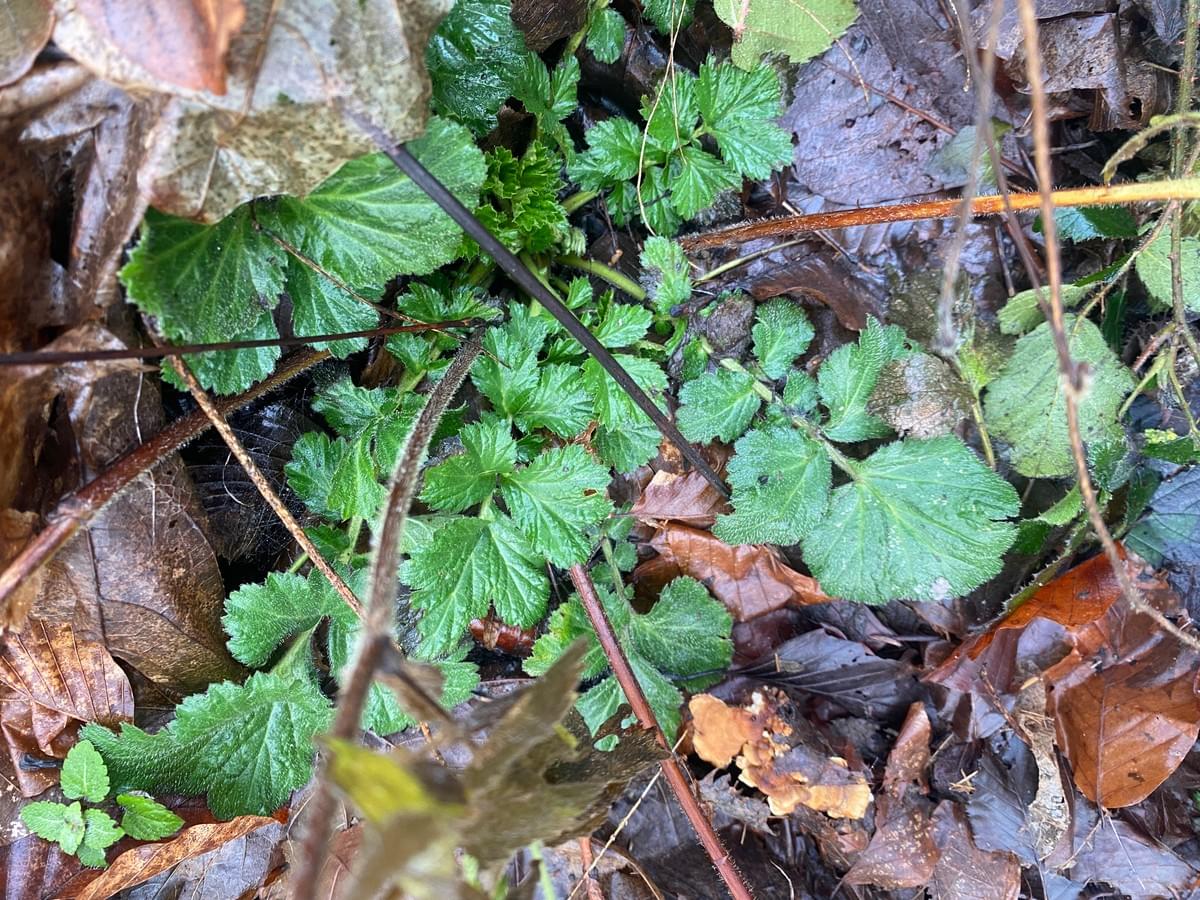
Wood Avens, known locally as Benoîte commune (blessed herb) and Gewone nagelkruid (clove herb), has in fact had a long association with humans, as its names suggest.
Medicinally, it was a serious herb in medieval Europe. The root and leaves are rich in tannins, so it was used for diarrhoea, mouth ulcers, sore throats and to stop minor bleeding.
In brewing and cookery, the clove-scented root (the Dutch name is a giveaway) was used as a spice before cloves were cheap and widely imported, finding its way into ales and wines, both for flavour and as a mild preservative.
It is related to the Geums of our garden borders. Mrs Bradshaw is a well-known variety with orangey-red flowers, so you may now recognise the pubescent leaves.
We'll return to Wood Avens later in the year, when it is flowering.